Why New England Weather Raises Gutter Installation Cost
A lot of homeowners look at gutter installation cost and assume the big factors are house size and material. In New England, that is only part of the story.
Snow load, ice, freeze-thaw swings, and hard spring rain all put extra stress on a gutter system. National replacement costs for an average home often land around $2,000 to $6,000, but local weather can push the price higher because the system has to be stronger, larger, and installed with more care.
New England weather puts more stress on gutters than many homeowners expect
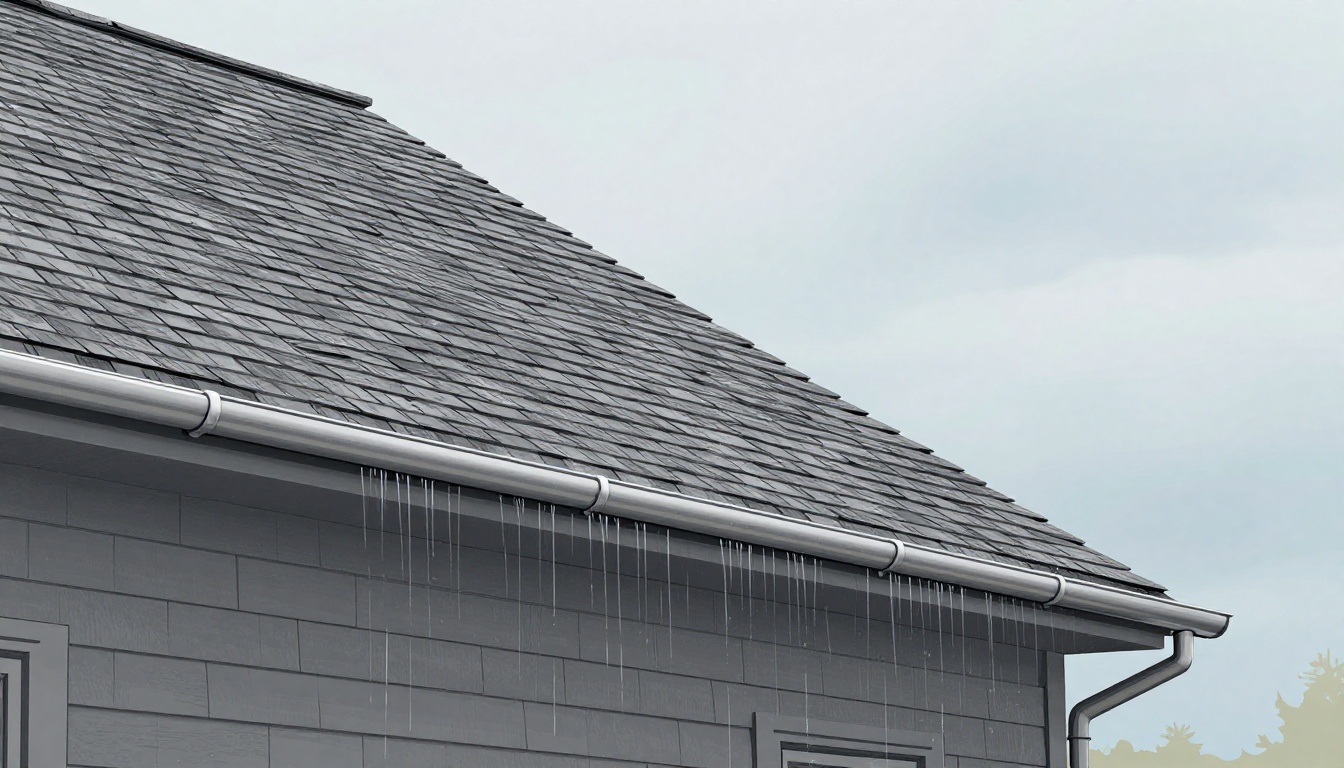
In a mild climate, gutters mostly move rain away from the house. In New England, they also deal with packed snow, ice buildup, fast meltwater, and storms that dump water in a hurry. That extra abuse is why cheap systems often fail early.
Gutters matter even more when a home has a basement, sits low on a slope, or drains poorly. In those cases, overflow is not a small nuisance. It can turn into wet basement walls, eroded soil, stained siding, and damage near the foundation.
Snow load and ice can bend, crack, or pull gutters loose
When snow sits in a gutter and then turns to ice, the weight adds up fast. Daytime thawing and cold nights make the problem worse because meltwater refreezes at the edge. That can create ice dams, loose fasteners, split seams, and sagging runs.
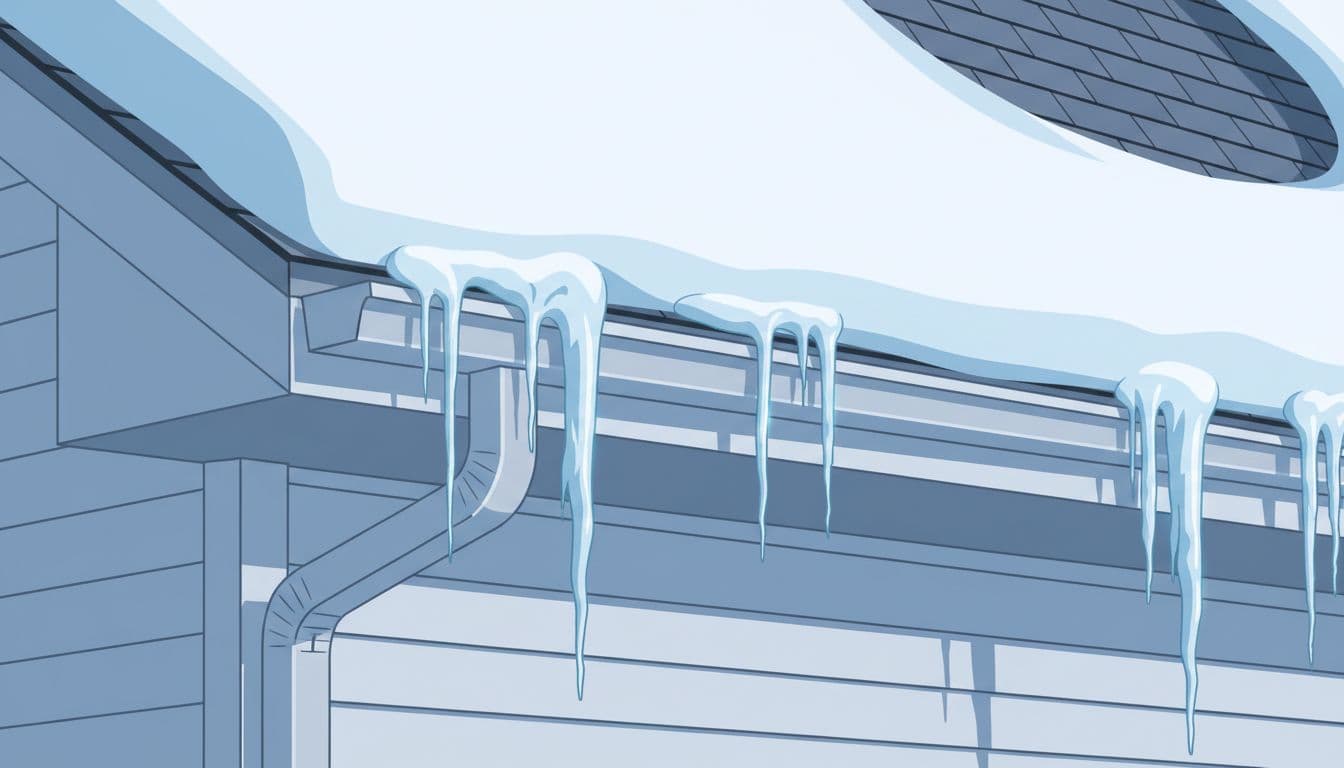
A stronger setup usually costs more because installers may use heavier-gauge material, tighter hanger spacing, and more secure attachment points. That lines up with local pricing data in this Massachusetts gutter cost guide , where weather and labor push totals above softer-climate jobs.
Heavy rain and fast snowmelt can overwhelm undersized systems
Spring is rough on gutters. Snowmelt can pour off the roof at the same time as a hard rain, so a small system can overflow even if it looked fine in summer.
Once water spills over, it often pools near downspouts, splashes dirt onto siding, and seeps toward the basement. A larger 5-inch or 6-inch gutter with properly matched downspouts often works better in this climate because it moves water faster and with less overflow.
In New England, undersized gutters are often more expensive in the long run than properly sized ones.
What weather adds to gutter installation cost in 2026
Most gutter work is priced by linear foot. Nationally, installed costs still range widely, about $4 to $40 per linear foot, depending on style and material. In New England, 2026 pricing often lands higher, roughly $16 to $25 per linear foot for many standard installs, with replacement adding more because old gutters have to come down first.
This quick table shows where weather starts changing the quote:
| Cost factor | Why it goes up in New England |
|---|---|
| Larger gutters | Heavy rain and snowmelt call for more capacity |
| Stronger hangers | Snow and ice need tighter support spacing |
| Replacement work | Old gutters, debris, and disposal add labor |
| Taller homes | Safer access and setup take more time |
| Drainage upgrades | Extensions and splash control protect basements |
The main takeaway is simple: the added price is usually tied to a real weather problem, not fluff in the estimate.
Stronger materials and bigger gutter sizes usually cost more upfront
Aluminum is still the most common pick because it balances price and life span. Still, the lightest option is not always the best choice in a snow-heavy area. Steel, copper, and custom fascia styles cost more, and even within aluminum, thicker material can raise the quote.
A regional breakdown in this Connecticut gutter pricing guide shows how durable materials and guard systems move the budget up. That higher upfront cost can make sense if it lowers the chance of sagging, leaks, and early replacement after repeated freeze-thaw cycles.
Extra labor, taller homes, and replacement work increase the quote
Two-story and multi-level homes cost more because the work is harder and riskier. Installers need more setup time, safer ladder work, and better access at roof edges.
Replacement also costs more than first-time installation. Old gutters must be removed, hauled away, and sometimes the fascia underneath needs repair. A 2026 This Old House homeowner survey found that many people regretted not getting enough itemized estimates before signing, and that makes sense because labor and materials are usually the biggest drivers.
Add-ons like gutter guards and downspout extensions may be worth it here
Leaves, pine needles, and roof grit clog gutters fast in wet weather. Then winter hits, the clog freezes, and water has nowhere to go.
Gutter guards and downspout extensions raise the initial price, but they can cut cleaning needs and move water farther from the house. If your lot drains poorly, those upgrades may save more than they cost.
The best gutter setup for snow, ice, and hard rain
For most New England homes, function matters more than fancy features. A good system is sized for the roof, pitched correctly, and attached well enough to hold up when winter gets ugly.
Right sizing, solid pitch, and secure hangers matter more than fancy upgrades
Many gutter failures happen because the system is too small, sloped wrong, or loosely attached. The fix is often straightforward: use 5-inch or 6-inch K-style gutters, size the downspouts correctly, and add enough hangers to support snow and ice weight.
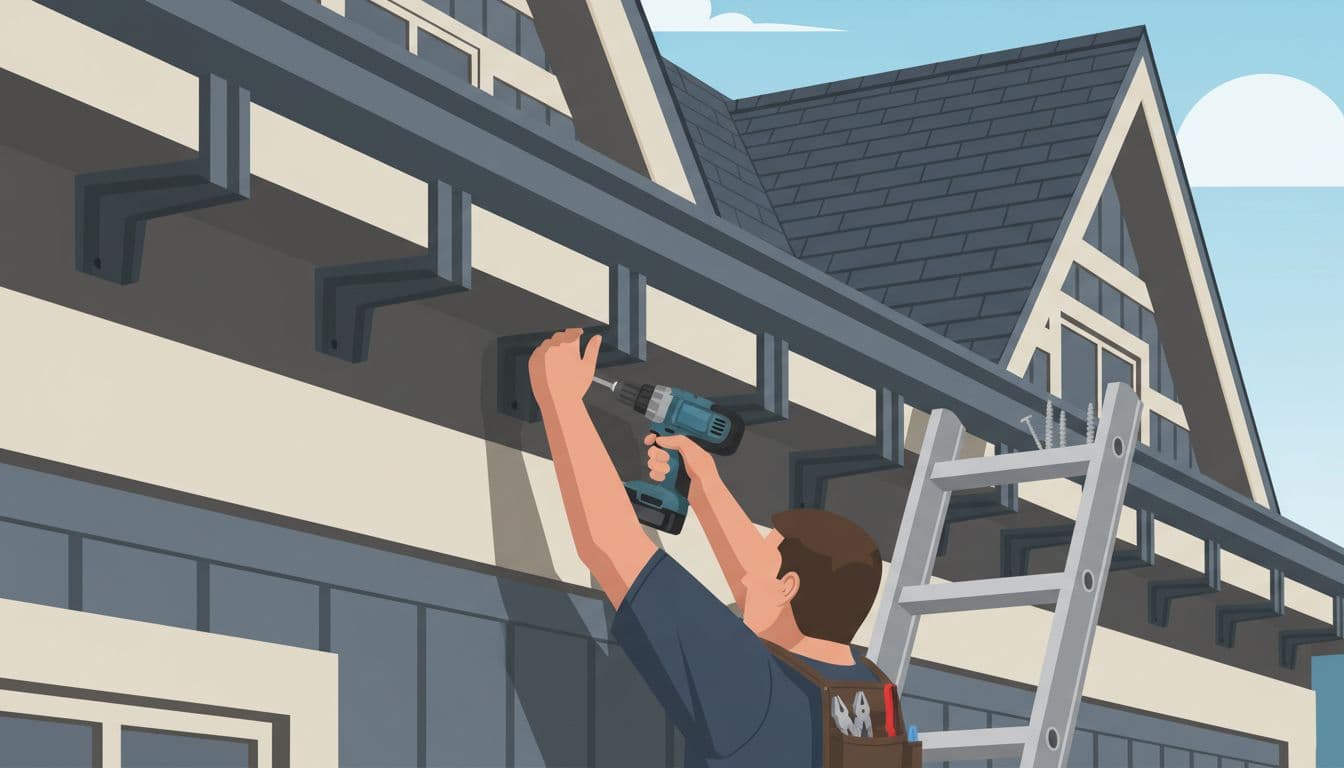
In some cold-weather installs, hanger spacing is tightened from a wider layout to around 24 inches for better support. If you want someone to look at the roof edge, drainage path, and gutter size together, Contact Troy.
Gutters work best when the roof edge and drainage plan are handled together
A gutter system is only one part of water control. The roof edge, ice-and-water protection, grading, splash blocks, and downspout discharge all matter too.
That is why one quote can look cheap and still be incomplete. If the installer is not talking about where the water goes after it leaves the downspout, the plan is missing a key piece.
How to keep costs under control without choosing the wrong gutter system
Saving money is good. Paying twice is not. The goal is to spend on the parts that solve New England weather problems and skip the rest.
Know when a repair is enough and when full replacement makes more sense
A repair may be fine if the problem is small and isolated. Full replacement is usually the better value when you see several of these at once:
- cracks, holes, or rust
- sagging runs or fallen fasteners
- peeling paint near the gutters
- pooling water near downspouts
- mildew near the foundation or basement moisture
If water is already getting where it should not, waiting often costs more than replacing the system.
Get several detailed quotes and ask what the weather upgrades include
Try to get at least three estimates. Then compare line items, not only the total. Ask about gutter size, material thickness, hanger spacing, removal fees, guard options, and drainage changes.
Local price examples, like these Manchester, NH seamless gutter costs , are useful for context, but your roofline and drainage needs still decide the real number. A lower quote is only better if it includes the features your house needs.
Final thoughts
In New England, gutter cost is shaped by weather as much as materials. Snow load, ice, hard rain, house height, and drainage needs all change what a good system looks like.
The cheapest quote can turn into the most expensive choice if the gutters are too small or too weak for local conditions. A careful inspection before the next storm season is usually the smartest way to protect your home.